ICSE Class 10
Mathematics
Trigonometric Identities — Chapter Test
Time: 20 min
Maximum marks: 20
General instructions: Answer all questions. Marks are shown in brackets [ ].
Objective
-
1.
[1]Prove the trigonometric identity by selecting the correct simplification of the expression: $(1 - \cos^2 A)\csc^2 A$
- A. $(1 - \cos^2 A) \times \frac{1}{\sin^2 A} = 1$
- B. $\sin^2 A \times \sec^2 A = 1$
- C. $(1 - \cos^2 A) \times \sin^2 A = 1$
- D. $\cos^2 A \times \csc^2 A = 1$
-
2.
[1]If $\sin \theta = \frac{a}{b}$, then $\cos \theta$ is equal to
- a. $\frac{b}{\sqrt{b^2 - a^2}}$
- b. $\frac{b}{a}$
- c. $\frac{\sqrt{b^2 - a^2}}{b}$
- d. $\frac{a}{\sqrt{b^2 - a^2}}$
-
3.
[1](i) Using tables, find the value of: $\sin 83^\circ 12'$
- A. 0.9930
- B. 0.9390
- C. 0.9903
- D. 0.9929
-
4.
[1]In the adjoining figure, the length of $BC$ is
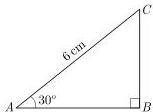
- a. $2\sqrt{3}$ cm
- b. $3\sqrt{3}$ cm
- c. $4\sqrt{3}$ cm
- d. $3$ cm
-
5.
[1]Using the table, find the value of: $\cos 23^\circ 6'$
- A. 0.9205
- B. 0.9182
- C. 0.9250
- D. 0.4067
-
6.
[1](i) Using tables, find the acute angle θ, when sin θ = 0.36.
- A. 21° 6'
- B. 15° 42'
- C. 36°
- D. 21.6°
-
7.
[1]In $\Delta ABC$, which of the following correctly proves the identity $\tan \left(\frac{B + C}{2}\right) = \cot \frac{A}{2}$?
- A. $\tan \left(\frac{B + C}{2}\right) = \tan \left(90^\circ - \frac{A}{2}\right) = \cot \frac{A}{2}$
- B. $\tan \left(\frac{B + C}{2}\right) = \tan \left(180^\circ - \frac{A}{2}\right) = -\cot \frac{A}{2}$
- C. $\tan \left(\frac{B + C}{2}\right) = \cot \left(90^\circ - \frac{A}{2}\right) = \tan \frac{A}{2}$
- D. $\tan \left(\frac{B + C}{2}\right) = \sin \left(\frac{B + C}{2}\right) / \cos \left(\frac{A}{2}\right)$
-
8.
[1]Which of the following correctly shows that $\sin 42^\circ \sec 48^\circ + \cos 42^\circ \csc 48^\circ = 2$?
- A. $\sin 42^\circ \sec 48^\circ + \cos 42^\circ \csc 48^\circ = \sin 42^\circ \csc 42^\circ + \cos 42^\circ \sec 42^\circ = 1 + 1 = 2$
- B. $\sin 42^\circ \sec 48^\circ + \cos 42^\circ \csc 48^\circ = \sin 42^\circ \cos 48^\circ + \cos 42^\circ \sin 48^\circ = \sin 90^\circ = 1$
- C. $\sin 42^\circ \sec 48^\circ + \cos 42^\circ \csc 48^\circ = \sec 42^\circ \csc 42^\circ = 1/(\sin 42^\circ \cos 42^\circ) = 2$
- D. $\sin 42^\circ \sec 48^\circ + \cos 42^\circ \csc 48^\circ = \sin^2 42^\circ + \cos^2 42^\circ = 1$
-
9.
[1]Which of the following correctly proves the identity: $\csc A (1 + \cos A)(\csc A - \cot A) = 1$?
- A. $(1 + \cos A)(1 - \cos A) = 1 - \cos^2 A = \sin^2 A$, which simplifies to 1 when multiplied by $\csc A$.
- B. $\csc A (1 + \cos A)(\csc A - \cot A) = (1 + \cos A)(\csc^2 A - \csc A \cot A) = 1 + \cos A - \cos A = 1$.
- C. $\csc A (1 + \cos A)(\csc A - \cot A) = (1 + \cos A)(1 - \sin A) = 1 - \sin A + \cos A - \sin A \cos A$.
- D. $\csc A - \cot A = \sin A$, so the expression simplifies to $\csc A (1 + \cos A) \sin A = 1 + \cos A$.
-
10.
[1]If $f(x) = \cos^2 x + \sec^2 x$, then $f(x)$
- a. $\geq 1$
- b. $\leq 1$
- c. $\geq 2$
- d. $\leq 2$
-
11.
[1]Prove the following trigonometric identity by selecting the correct simplified form of the left-hand side (L.H.S.): $\frac{\sin A}{\sin (90^\circ - A)} + \frac{\cos A}{\cos (90^\circ - A)}$
- A. $\frac{\sin A}{\cos A} + \frac{\cos A}{\sin A}$
- B. $\sec A \csc A$
- C. $\tan A + \cot A$
- D. $\frac{1}{\sin A \cos A}$
-
12.
[1]Which of the following correctly proves the identity: $(\sec A - \cos A)(\sec A + \cos A) = \sin^2 A + \tan^2 A$?
- A. $(\sec A - \cos A)(\sec A + \cos A) = \sec^2 A - \cos^2 A = 1 + \tan^2 A - \cos^2 A = \sin^2 A + \tan^2 A$
- B. $(\sec A - \cos A)(\sec A + \cos A) = \sec^2 A - \sin^2 A = 1 + \tan^2 A - \sin^2 A = \cos^2 A + \tan^2 A$
- C. $(\sec A - \cos A)(\sec A + \cos A) = \cos^2 A - \sec^2 A = \cos^2 A - (1 + \tan^2 A) = -\sin^2 A - \tan^2 A$
- D. $(\sec A - \cos A)(\sec A + \cos A) = \sec A \cos A = 1 = \sin^2 A + \cos^2 A$
-
13.
[1]Which of the following correctly simplifies the expression $\sin A (1 + \tan A) + \cos A (1 + \cot A)$?
- A. $\sec A + \csc A$
- B. $\sin A + \cos A$
- C. $\frac{1 + \sin A + \cos A}{\cos A \sin A}$
- D. $\tan A + \cot A$
-
14.
[1]Prove the trigonometric identity: $(\sec^2 A - 1)\cot^2 A = 1$. Which of the following simplifications correctly demonstrates this identity?
- A. $(\sec^2 A - 1)\cot^2 A = \tan^2 A \cot^2 A = \tan^2 A \times \frac{1}{\tan^2 A} = 1$
- B. $(\sec^2 A - 1)\cot^2 A = \sin^2 A \cot^2 A = \sin^2 A \times \frac{\cos^2 A}{\sin^2 A} = \cos^2 A$
- C. $(\sec^2 A - 1)\cot^2 A = (1 - \sec^2 A)\cot^2 A = -\tan^2 A \cot^2 A = -1$
- D. $(\sec^2 A - 1)\cot^2 A = \sec^2 A (1 - \tan^2 A) = \sec^2 A - \sec^2 A \tan^2 A$
-
15.
[1]Prove the trigonometric identity by selecting the correct simplification of the left-hand side: $\frac{1}{1 + \sin A} + \frac{1}{1 - \sin A} = 2 \sec^2 A$. Which of the following steps correctly simplifies the left-hand side?
- A. $\frac{2}{1 - \sin^2 A} = \frac{2}{\cos^2 A} = 2 \sec^2 A$
- B. $\frac{2}{1 + \sin^2 A} = \frac{2}{\cos^2 A} = 2 \sec^2 A$
- C. $\frac{2}{1 - \sin A} = \frac{2}{\cos^2 A} = 2 \sec^2 A$
- D. $\frac{2}{1 + \sin A} = \frac{2}{\cos^2 A} = 2 \sec^2 A$
-
16.
[1]$$3 \cos 80^{\circ} \csc 10^{\circ} + 2 \cos 59^{\circ} \csc 31^{\circ}$$ equals which of the following?
- A. 3
- B. 5
- C. 6
- D. 1
-
17.
[1]Which of the following correctly proves the identity $2\sin^2 A + \cos^4 A = 1 + \sin^4 A$?
- A. $2\sin^2 A + (1 - \sin^2 A)^2 = 2\sin^2 A + 1 - 2\sin^2 A + \sin^4 A = 1 + \sin^4 A$
- B. $2\sin^2 A + \cos^4 A = 2\sin^2 A + \cos^2 A \cdot \cos^2 A = 2\sin^2 A + (1 - \sin^2 A) = 1 + \sin^2 A$
- C. $2\sin^2 A + \cos^4 A = 2(1 - \cos^2 A) + \cos^4 A = 2 - 2\cos^2 A + \cos^4 A = 2 - \cos^2 A$
- D. $2\sin^2 A + \cos^4 A = \sin^2 A + \sin^2 A + \cos^4 A = \sin^2 A + (\sin^2 A + \cos^4 A) = \sin^2 A + 1$
-
18.
[1]If $4\sin \theta = 3$, what is the value of $x$ in the equation $\sqrt{\frac{\operatorname{cosec}^2 \theta - \cot^2 \theta}{\sec^2 \theta - 1}} + 2 \cot \theta = \frac{\sqrt{7}}{x} + \cos \theta$?
- A. $\frac{3}{4}$
- B. $\frac{4}{3}$
- C. $\frac{3}{\sqrt{7}}$
- D. $\frac{\sqrt{7}}{3}$
-
19.
[1]Which of the following correctly proves the identity: $\frac{\sin A + \cos A}{\sin A - \cos A} + \frac{\sin A - \cos A}{\sin A + \cos A} = \frac{2}{2 \sin^2 A - 1}$?
- A. $\frac{(\sin A + \cos A)^2 + (\sin A - \cos A)^2}{\sin^2 A - \cos^2 A} = \frac{2}{\sin^2 A - \cos^2 A} = \frac{2}{2 \sin^2 A - 1}$
- B. $\frac{2(\sin^2 A + \cos^2 A)}{\sin^2 A - \cos^2 A} = \frac{2}{2 \cos^2 A - 1}$
- C. $\frac{(\sin A + \cos A) + (\sin A - \cos A)}{\sin A - \cos A} = \frac{2 \sin A}{\sin A - \cos A}$
- D. $\frac{2(\sin A + \cos A)^2}{\sin^2 A - \cos^2 A} = \frac{2}{1 - 2 \cos^2 A}$
-
20.
[1]Which of the following correctly proves the identity: $\frac{1}{\sec A + \tan A} = \sec A - \tan A$?
- A. Multiply numerator and denominator by $\sec A - \tan A$ and use $\sec^2 A - \tan^2 A = 1$.
- B. Multiply numerator and denominator by $\sec A + \tan A$ and simplify using $\sec^2 A + \tan^2 A = 1$.
- C. Rewrite $\sec A$ and $\tan A$ in terms of $\sin A$ and $\cos A$, then cross-multiply.
- D. Square both sides and use the identity $\sec^2 A - \tan^2 A = 1$ to equate them.
— End of paper —
New to AI Exam Master?
Chapter-wise practice, mock tests, AI tutor & the full ICSE syllabus — see everything on the main site.