ICSE Class 10 Study of Acids, Bases and Salts — Mock Test (2027)
Free online mock test for Study of Acids, Bases and Salts (ICSE Class 10 Chemistry) — 20 competency-based questions based on the latest CISCE 2027 syllabus, with instant marking. Try the samples below, then take the full test free.
What to expect: This mock test covers key concepts from the Study of Acids, Bases and Salts chapter — including application-based and competency-focused questions aligned with how ICSE actually sets the paper.
Tip: Attempt without notes first to identify gaps, then review explanations for any wrong answers. Retake after a few days for best retention.
Sample questions
-
1.Match the following:
Column A Column B (i) Acid salt (A) Ferrous ammonium sulphate (ii) Double salt (B) Contains only ions (iii) Ammonium hydroxide solution (C) Sodium hydrogen sulphate (iv) Dilute hydrochloric acid (D) Contains only molecules (v) Carbon tetrachloride (E) Contains ions and molecules -
2.Nitrogen oxide is a:
- A.Greenish yellow coloured gas
- B.Reddish brown coloured gas
- C.Colourless and odourless gas
- D.None of these.
-
3.How many water molecules does hydrated calcium sulphate contain?
- A.2
- B.10
- C.7
- D.5
-
4.Which of the following represents the structure of the stable positive ion formed when an acid dissolves in water? (Refer to the diagram for clarity:
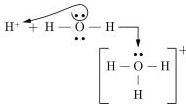 )
)- A.Hydroxide ion (OH⁻) structure
- B.Hydronium ion (H₃O⁺) structure
- C.Proton (H⁺) alone
- D.Water molecule (H₂O) structure
-
5.The products formed when an acid reacts with a base is
- a.salt and hydrogen
- b.salt and oxygen
- c.salt and water
- d.salt and carbon dioxide
Ready? Take the full 20-question test free — instant marking, no sign-up needed.
▶ Start free mock test